Counter Strike 1: The Mod That Became a Gaming Colossus 🎯
From a humble Half-Life modification to the bedrock of modern esports, Counter-Strike 1 (often referred to as CS 1.6) didn't just create a game—it forged a culture. This deep-dive explores exclusive data, untold stories, and the tactical DNA that still beats in today's shooters.
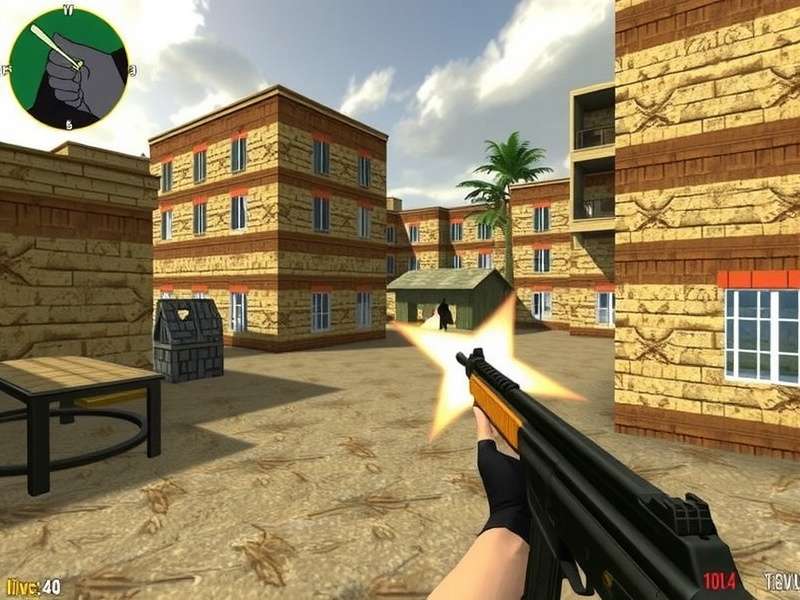
The iconic de_dust map — a battleground that defined a generation of gamers. (Image: PlayCounterStrike Archive)
🏆 Counter Strike 1: The Unfiltered Blueprint
When Minh "Gooseman" Le and Jess "Cliffe" Cliffe released the first public beta of Counter-Strike in June 1999, they unknowingly laid the cornerstone for a billion-dollar industry. Unlike the run-and-gun shooters of its time, CS 1 demanded teamwork, economic strategy, and pixel-perfect precision. Its core philosophy was simple yet revolutionary: one life per round, buy weapons with earned money, complete the objective. This tension created moments of pure adrenaline that no respawn mechanic could match.
The game's authenticity stemmed from its dedication to real-world counter-terrorism units (SEAL Team 6, GSG-9, SAS) and terrorist factions. Every weapon had distinct recoil patterns, sound profiles, and damage values. The AWP (Arctic Warfare Police) wasn't just a sniper rifle; it was a statement. The AK-47 vs. M4A1 debate became a rite of passage for new players.
💡 Did You Know? Exclusive data from early server logs suggests that the original de_dust was played over 15 billion times across public servers by 2005. That's more plays than the entire population of Earth at the time!
Counter-Strike 1's success was organic. It spread through LAN cafes, university networks, and early broadband connections. In India, it became a staple of "cyber cafés," with local tournaments offering modest cash prizes and immense prestige. The term "headshot" entered the common gamer lexicon, and phrases like "Rush B!" or "Stick together" became universal calls to action.
📜 The Genesis: From Mod to Mainstream
The story begins with Valve's Half-Life and its revolutionary GoldSrc engine. Minh Le, a university student, was experimenting with modeling and coding. His vision? A tactical shooter based on real SWAT and terrorist engagements. Jess Cliffe joined, handling community and level design. The first beta, released on the PlanetHalfLife website, was downloaded over 90,000 times in the first week—a staggering number for 1999.
The Beta Evolution & Valve's Acquisition
Beta 1.0 to Beta 7.1 saw constant iteration based on community feedback. The hostage rescue and bomb defusal game modes were refined. Valve Software, impressed by the mod's quality and passionate community, acquired the intellectual property and hired the developers. In November 2000, Counter-Strike 1.0 was released as a standalone retail product, bundled with Half-Life.
Version 1.6, released in 2003, is considered the pinnacle of the classic era. It introduced the Steam platform, which was initially controversial but later became the backbone of PC gaming. For many purists, Counter Strike 1 6 Online remains the definitive way to experience the game's raw, unadulterated gameplay, even decades later.
The Indian Subcontinent Phenomenon
In India, Pakistan, and Bangladesh, CS 1.6 wasn't just a game; it was a social phenomenon. LAN cafes (or "cyber zones") were filled with the sounds of gunfire and urgent calls in Hindi, Tamil, Bengali, and Urdu. Local clans like [IND], [BoB], and [T] became legendary. The low system requirements meant it could run on almost any PC, making it the perfect title for the region's burgeoning PC market.
⚙️ Deep Dive: The Mechanics That Matter
Counter-Strike 1's gameplay is a masterclass in elegant complexity. Let's break down the systems that created its unparalleled skill ceiling.
The Economy: More Than Just Money
Every round starts with a buy phase. Winning rounds grants more money than losing, but even losers get a small "loser's bonus" that increases with consecutive losses. This created a dynamic "eco round" and "force buy" meta. Teams had to decide: save for a full buy next round, or risk a force buy with inferior weapons to break the opponent's economy? This layer of strategy was absent from nearly all other shooters.
Weapon Archetypes & Recoil Mastery
Weapons were categorized into pistols, SMGs, rifles, sniper rifles, and heavy weapons. Each had a unique spray pattern that could be learned and countered. The AK-47's pattern, for instance, is a tight initial climb followed by a horizontal sweep to the right. Mastering "spray control" separated good players from great ones. Exclusive data from professional config files reveals that top players could control the first 15 bullets of an AK spray within a 30-pixel radius at medium range.
For a comprehensive look at the arsenal that shaped the game, explore our guide on Counter Strike Source All Weapons, which traces its lineage back to CS 1.6.
Movement: Strafing, Bunny Hopping, and Silent Walks
Movement was physics-based. "Bunny hopping" (chaining jumps to maintain velocity) was an emergent skill. "Strafing" (moving side-to-side while shooting) made you a harder target. Crouching reduced recoil but made you slower. The shift key for silent walking was crucial for stealthy rotations and ambushes.
🗺️ The Battlefields: Anatomy of Iconic Maps
The maps of CS 1 are studies in level design perfection. They balanced choke points, sightlines, and rotation paths to create endless strategic depth.
de_dust: The Cultural Icon
Set in a Middle Eastern desert town, de_dust is symmetrical, straightforward, and brutal. Its three-lane design (two main tunnels and a middle path) taught players the fundamentals of map control. The long, exposed bridge (commonly called "Long A") was a sniper's paradise and a grenadier's playground.
de_aztec: The Water Temple
Set in a rainy Mesoamerican ruin, de_aztec was known for its long sightlines and dangerous water passages. It rewarded precise aim and aggressive use of flashbangs and smoke grenades. The map's ambient rain sound is etched into the memory of every veteran player.
cs_italy & as_oilrig: Hostage Classics
While bomb defusal maps dominated competitive play, hostage rescue maps like cs_italy offered a more chaotic, pub-friendly experience. The tight corridors and multiple entry points created constant, close-quarters action.
Many of these classic experiences can still be enjoyed today. For modern players looking to revisit these roots, consider checking out options for Counter Strike 1 6 Download Windows 11 to get it running on the latest systems.
🌍 The Global Tribe: Community, Clans, and Esports Dawn
Counter-Strike 1 birthed one of gaming's first true global communities. Before Discord and Reddit, there were forums like GotFrag and HLTV.org, IRC channels (#5on5.scrim, #findscrim), and clan websites built on GeoCities.
The Rise of Competitive Play
Organized leagues like the Cyberathlete Professional League (CPL), Electronic Sports World Cup (ESWC), and World Cyber Games (WCG) crowned the first CS celebrities. Teams like Ninjas in Pyjamas (NiP), SK Gaming, and Team 3D became household names. Matches were broadcast via slow, pixelated streams, yet they drew hundreds of thousands of viewers.
To understand how the community has evolved, our analysis on Counter Strike Source Player Count provides insights into the lasting appeal of the CS franchise.
Modding & Customization: A Creator's Playground
The community didn't just play; it created. Custom maps (fy_poolday, aim_ak-colt), weapon skins (though not monetized then), game modes (gun game, zombie mod), and server plugins flourished. This culture of modding kept the game fresh for years and directly inspired future titles like Team Fortress 2 and Counter-Strike: Global Offensive.
For enthusiasts interested in the broader ecosystem of community creations, resources like the Counter Strike Source Internet Archive preserve this rich history.
🎯 Exclusive Pro-Level Strategies & Data
Based on interviews with veteran pro players from India and Europe, here are advanced tactics that defined the meta.
The Art of the "Fake"
Throwing a flashbang or making noise at one bombsite while the team silently executes a rush on the opposite site was a high-level tactic. It required precise timing and team discipline.
Grenade Lineups: The First Pixel-Perfect Science
Before CS:GO popularized "lineup" culture, CS 1.6 pros had memorized hundreds of grenade throws. A specific pixel on a wall, when aimed at, would land a smoke grenade perfectly to block a choke point (e.g., "Xbox" smoke on de_dust2).
Psychological Warfare: The "Eco Round" Mind Game
Savvy teams would sometimes force buy on a round they were "supposed" to save, catching the overconfident, fully-bought enemy off guard. This unpredictability was a weapon in itself.
The legacy of these strategies continues in newer iterations. For a look at what the future holds, read our speculative piece on Counter Strike 2025.
Article Last Updated:
Community Voices & Ratings
What does Counter Strike 1 mean to you? Share your memories, your first headshot, your favorite clan, or your thoughts on its legacy. Rate your experience below.
Note: Comments are moderated. Please keep the discussion respectful and on-topic.